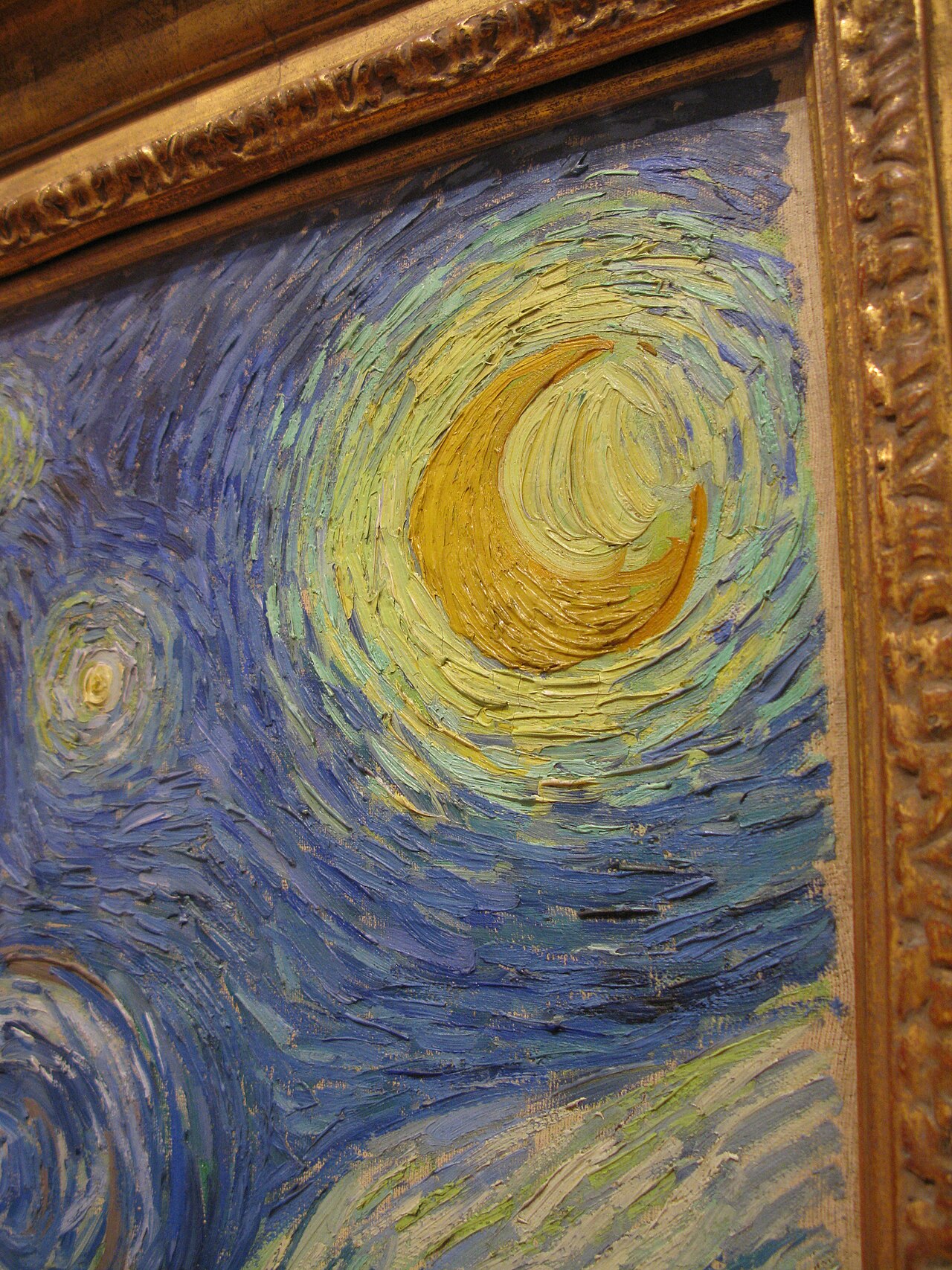
Subject: Sky
Curved, Sweeping Swirls
Strokes wrap in concentric arcs to capture the moving currents of wind, clouds, and celestial light.
Observe: The brushstrokes direct the viewer's eye in sweeping circular loops.
Discover how direction, rhythm, color, and visible marks can bring a painting to life.
When Vincent van Gogh stood at his easel, he did not blend away his brushwork to create a smooth, polished surface. He allowed every stroke to remain visible, tactile, and purposeful.
Traditional academy training taught artists to disguise their brush marks. Van Gogh understood that a visible brushstroke carries emotional velocity, sculptural mass, and living rhythm. Through the thickness, direction, curvature, and placement of his marks, the paint itself becomes part of the expression.
Van Gogh's brushwork is part of the image. Look closely at The Starry Night (1889, Museum of Modern Art) and its high-resolution details. You can see individual decisions in the paint: direction, length, thickness, rhythm, overlap, and color.
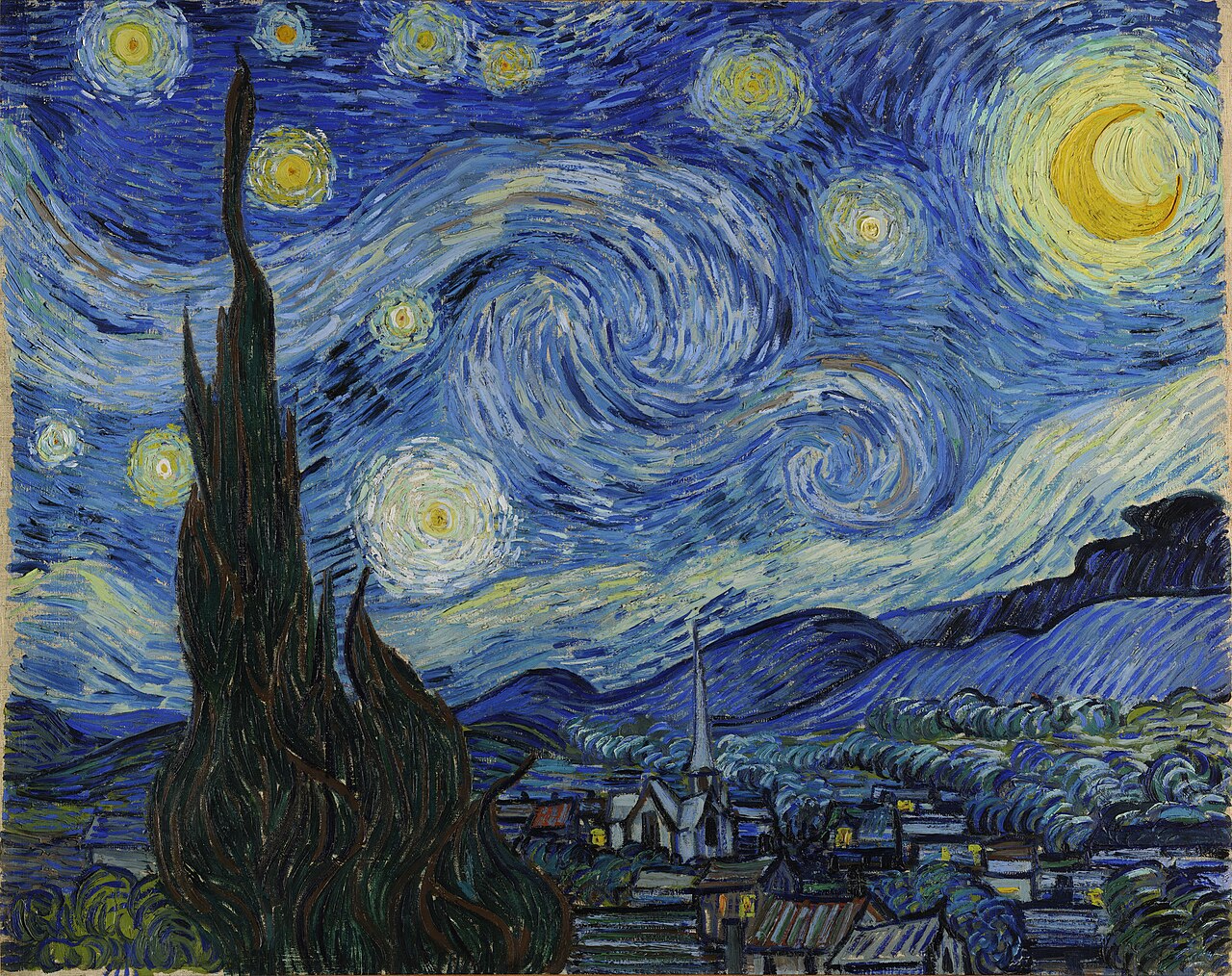
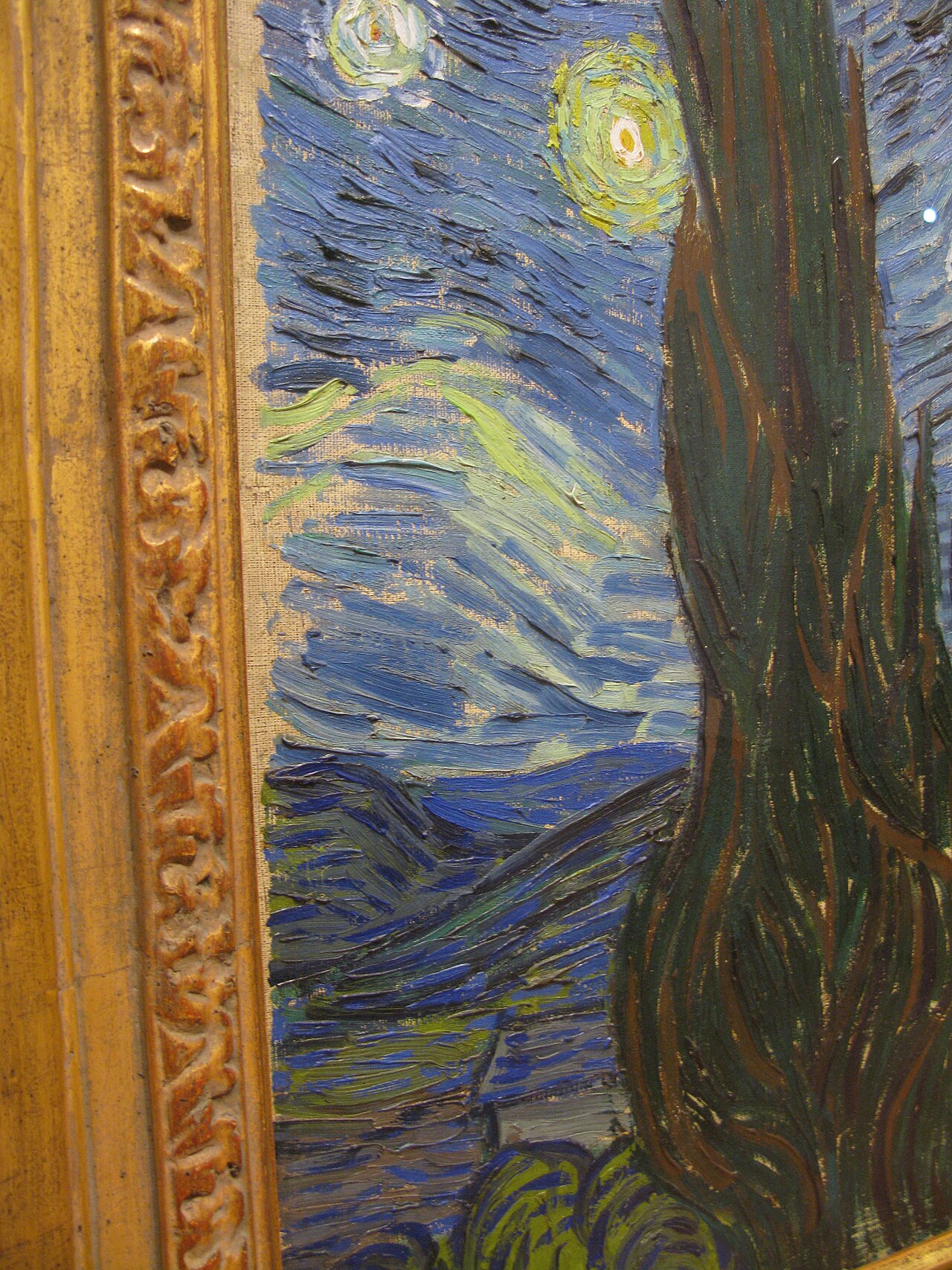
Van Gogh did not apply a single repetitive texture across the whole canvas. Different subjects received completely different directional marks that matched their physical nature:
Strokes wrap in concentric arcs to capture the moving currents of wind, clouds, and celestial light.
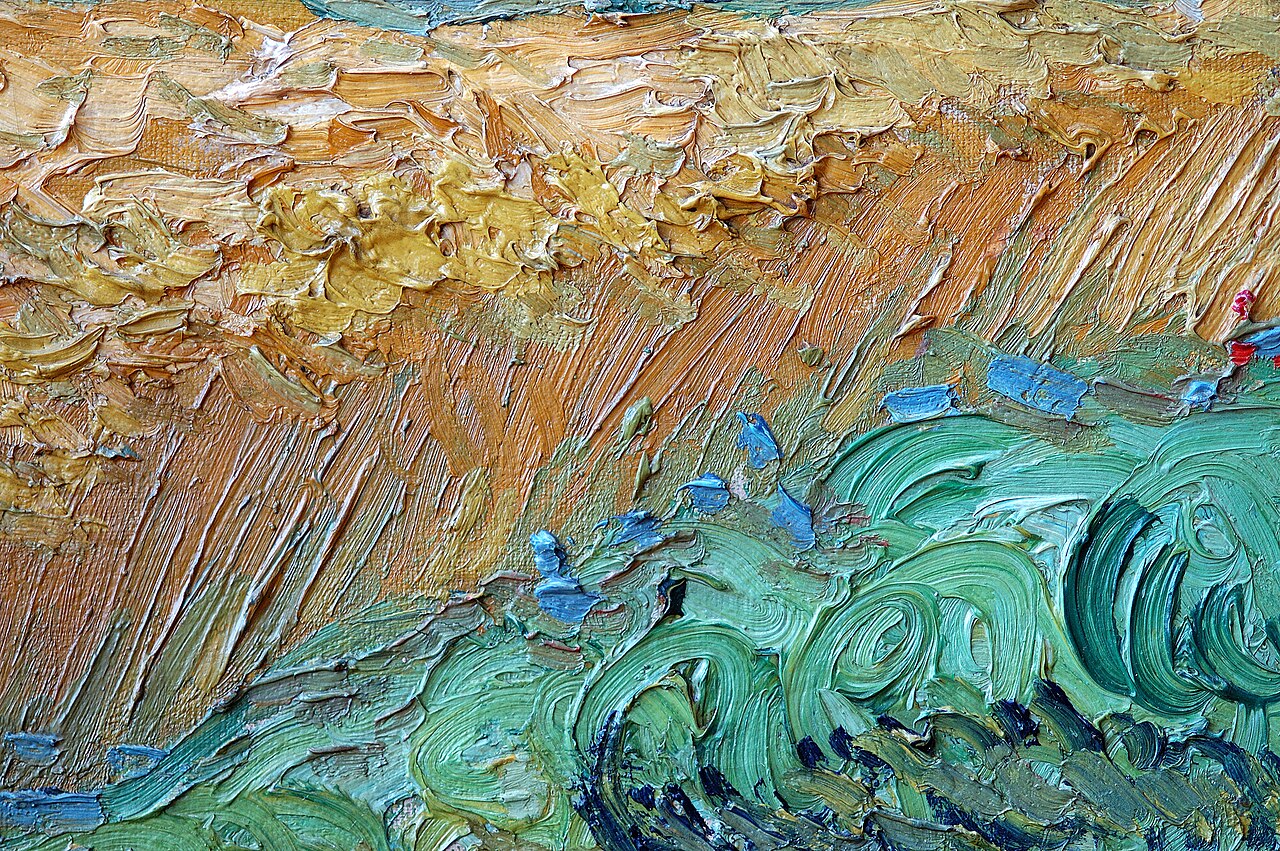
Strokes curve upward and inward, describing the organic botanical growth and flexible branching of living trees.
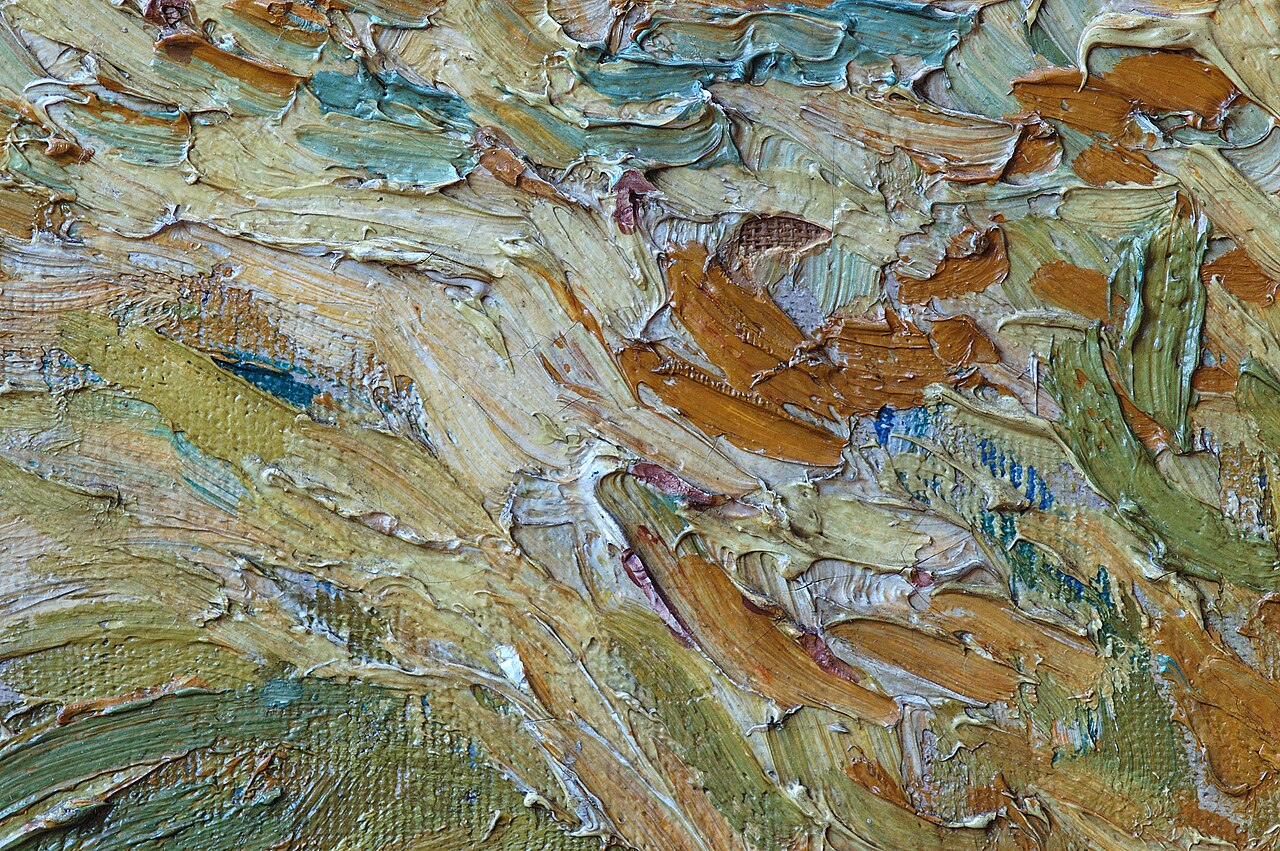
Repeated diagonal marks in yellow ochre, cadmium gold, and green that lean in unison to suggest a gust of wind.
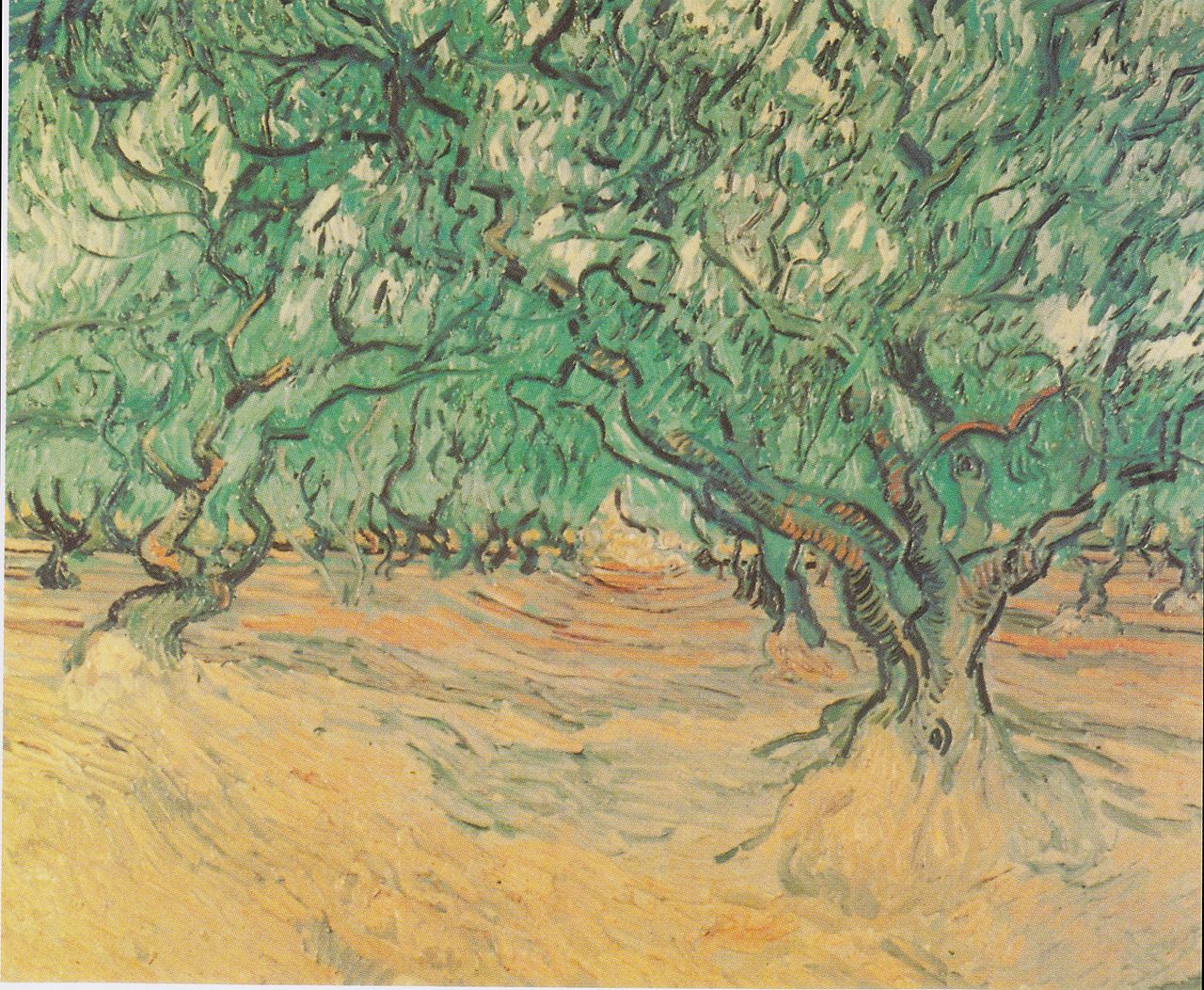
Twisting, undulating marks hug the gnarled trunks and undulating earth, capturing the rugged Provence landscape.
When you look at an authentic Van Gogh masterwork, every visible mark is performing a specific job on the canvas:
| What You See | What It Does for the Painting |
|---|---|
| Curved, swirling marks | Creates a feeling of continuous motion, wind, and atmospheric flow. |
| Repeated directional marks | Establishes visual rhythm, leading the eye across fields and water. |
| Short, staccato marks | Creates surface activity, sparkle, and tactile texture. |
| Longer, continuous marks | Guides the viewer's gaze firmly along structural contours and horizons. |
| Overlapping, layered marks | Builds structural mass, depth, and palpable three-dimensional volume. |
| Separate, unmixed color strokes | Allows complementary pigments to interact optically, creating luminous vibration. |
| Thick paint (impasto ridges) | Catches physical ambient light, making the painted surface an active sculpted object. |
Select an authentic Van Gogh detail below. Study the actual brushwork and determine which direction the paint is moving:
Now take what you observed and apply it yourself. Select a prompt below, then use the drawing area to create 20 to 30 deliberate strokes. Every stroke should describe movement:
In paintings like The Starry Night and Wheat Field with Cypresses, Van Gogh placed complementary colors side by side (deep blues against glowing oranges and golden yellows). Notice what happens when you compare physical palette mixing to separate visible strokes:
Blue and Orange stirred together into a single paste. Complementary wavelengths cancel out, resulting in a dull neutral gray-brown.
The two colors are dragged together halfway with a knife. The borders become murky and lose chromatic clarity.
Pure Ultramarine Blue and pure Chrome Orange strokes rest side by side. The eye synthesizes them dynamically, creating luminous optical vibration!
Choose a simple subject you love: a tree, flower, country field, coastal water, sky, or landscape. You will paint it twice on separate canvases:
Paint your subject in your usual way. Focus on getting accurate proportions, local colors, and basic lighting. Do not worry about stylized brushwork yet. Complete the study and set it aside.
Before starting your second version, study your subject and ask: “What is this subject doing?”
Choose ONE movement word. On your second canvas, deliberately use your brushstrokes to reinforce that movement. Vary your stroke direction, length, pressure, spacing, curvature, and density. Do not make every stroke identical.
Try painting a small passage using exactly 30 intentional strokes. Every stroke must have a job: describing form, suggesting movement, creating rhythm, or establishing emphasis. After 30 strokes, STOP and ask: “Which strokes are doing the most work?”
Place Version One (Observed) and Version Two (Expressed) side by side on your easel. Look at both with fresh eyes:
Van Gogh did not paint so that artists would mechanically copy his handwriting. He showed us that marks made with honesty, intention, and energy make paint come alive.